Best Eco-Friendly Umbrella 2026: 4 PFAS-Free Picks

As an Amazon Associate, I earn from qualifying purchases. This helps us continue providing independent, honest reviews at no extra cost to you.

The problem with most “eco” umbrellas: they use PFAS waterproofing — fluorinated chemicals that persist in the environment and human body indefinitely. A recycled canopy with PFAS coating isn’t meaningfully more sustainable than a standard umbrella.

These 4 picks use recycled or sustainable materials AND avoid the chemicals that make standard waterproofing problematic. They also hold up in real weather — because the most sustainable umbrella is the one you don’t throw away after one season.

What Actually Makes an Umbrella Eco-Friendly

Three things matter — not just the marketing language:

1. Recycled canopy fabric. Look for recycled PET (rPET) — polyester made from post-consumer plastic bottles. Each umbrella typically diverts 7–12 plastic bottles from landfill. The Global Recycled Standard (GRS) certification verifies the recycled content claim. Without GRS, “recycled materials” is unverifiable.

2. PFAS-free waterproofing. Traditional DWR (Durable Water Repellent) coatings use PFAS — “forever chemicals” that accumulate in ecosystems and human tissue. Newer PFAS-free DWR alternatives provide equivalent water repellency. This is the most important distinction most reviews miss.

3. Durability. An umbrella that lasts 5 years is more sustainable than one made from recycled materials that breaks in 6 months. Fiberglass ribs, reinforced joints, and quality mechanisms determine real-world lifespan.

The 4 Best Eco-Friendly Umbrellas 2026

1. G4Free Eco Windproof — Best Overall

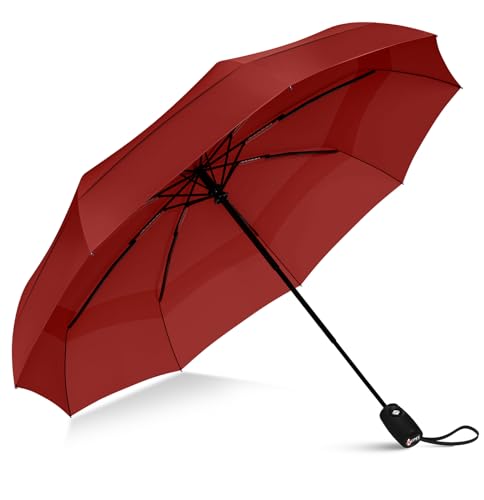
G4Free Eco Windproof umbrella — recycled materials, 9 fiberglass ribs

G4Free Eco Windproof

9 fiberglass ribs · 55 mph · Reflective trim · Eco materials

Check price on Amazon →

The G4Free Eco Windproof is the most complete eco umbrella on this list — it combines genuine wind resistance with sustainable materials without compromising on performance.

Why it’s genuinely eco: eco-conscious canopy construction, 9 fiberglass ribs (no steel that rusts and weakens), reflective safety trim. The frame is built to last rather than be replaced annually.

Wind performance: 55 mph rating with double canopy venting. The 9-rib construction creates better canopy tension than standard 8-rib models — less flex, less chance of inversion in real gusts. Auto open/close with a reliable mechanism.

Best for: buyers who want a single umbrella that handles real weather and uses better materials. The reflective trim adds low-light visibility — useful for commuters.

Honest limitation: no GRS certification listed — G4Free doesn’t publish detailed material sourcing documentation. The eco credentials are product-level, not third-party verified.

2. Original Duckhead Compact — Best Recycled PET + Sustainable Handle

Original Duckhead compact umbrella — recycled PET, sustainably sourced wood handle

Original Duckhead Compact

Recycled PET · Birchwood handle · 9 plastic bottles diverted

Check price on Amazon →

The Duckhead has the most complete sustainability credentials on this list. Canopy made from recycled PET fabric — each umbrella diverts approximately 9 post-consumer plastic bottles. Handle made from sustainably sourced Birchwood. Packaging fully recyclable. Woman-owned UK brand with transparent supply chain.

Why it stands out: most eco umbrellas address the canopy but use virgin plastic handles. Duckhead addresses both. The distinctive duck-head wooden handle is also noticeably more comfortable to grip than standard rubber handles.

Best for: buyers who want verified sustainable credentials across the full product, not just the canopy. Also the most stylish option on this list — 18+ colors and patterns.

Honest limitation: wind resistance is moderate — steel and aluminum frame performs well in typical rain but isn’t designed for 55+ mph storm conditions. Not the right choice for exposed coastal use.

3. Totes ECO J-Handle — Best Budget Eco Option

Totes ECO J-Handle umbrella — sustainable fabric, auto open

Totes ECO J-Handle

Sustainable fabric · Auto open · J-handle wrist carry · Budget

Check price on Amazon →

Totes is one of the most trusted umbrella brands in the US with decades of quality track record. Their ECO line brings sustainable canopy materials to a practical stick umbrella format at an accessible price.

Why it works: ECO canopy fabric with reduced environmental impact. J-handle design allows wrist carry, freeing one hand when needed. Auto open for fast deployment. The stick format handles wind better than compact folding designs.

Best for: buyers who want a reliable everyday eco umbrella without paying a premium. Good for city use, commuting, and light travel.

Honest limitation: Totes doesn’t publish detailed PFAS-free documentation for this specific line. If PFAS-free certification is your priority, the Duckhead is a better choice.

4. BAODINI Mini — Most Compact Eco Option

BAODINI Mini compact umbrella — small and lightweight

BAODINI Mini

Ultra-compact · Lightweight · Purse-friendly size

Check price on Amazon →

The BAODINI Mini is the most compact option on this list — designed for buyers who need a lightweight, purse-friendly umbrella that doesn’t take up space in their bag.

Best for: city dwellers and travelers who want a backup umbrella that fits anywhere. The compact size means you’ll actually carry it — the most sustainable choice is the one you use rather than leave at home.

Honest limitation: ultra-compact umbrellas trade wind resistance for size. Best for light to moderate rain, not storm conditions.

Comparison Table

Umbrella Recycled fabric PFAS-free Wind rating Best for
G4Free Eco Windproof ✅ Eco materials Not specified 55 mph Wind + eco performance
Original Duckhead ✅ rPET + Birchwood ✅ Yes Moderate Full eco credentials
Totes ECO J-Handle ✅ ECO fabric Not specified Standard Budget everyday eco
BAODINI Mini Compact design Not specified Light-moderate Most compact option

How to Spot Greenwashing in Umbrella Marketing

Watch for these specific red flags:

  • “Eco-friendly materials” without specifics — what materials, what percentage, what certification?
  • Recycled canopy + PFAS coating — the canopy may be recycled but the waterproofing chemistry negates the environmental benefit
  • No GRS certification — unverified “recycled” claims are common. GRS certification confirms the recycled content
  • Single-use framing — any umbrella described as “disposable” or “affordable replacement” is not eco-friendly regardless of materials

The most sustainable umbrella is simply a durable one. A $35 fiberglass-frame umbrella that lasts 5 years is more environmentally responsible than a $15 “eco” umbrella that breaks in one season.

Frequently Asked Questions

What makes an umbrella truly eco-friendly?

Three things: recycled or sustainable canopy fabric (ideally GRS-certified rPET), PFAS-free waterproofing coating, and durable construction that extends lifespan. Durability matters most — an umbrella you replace every season creates more waste than a premium one that lasts a decade.

What are PFAS chemicals in umbrellas?

PFAS (per- and polyfluoroalkyl substances) are synthetic chemicals used in traditional DWR waterproofing coatings. They’re called “forever chemicals” because they persist in the environment and accumulate in human tissue indefinitely. PFAS-free DWR alternatives now provide equivalent water repellency without the environmental persistence. The EU has begun restricting PFAS in consumer products.

Is recycled PET as waterproof as standard polyester?

Yes. Recycled PET performs equivalently to virgin polyester for water resistance and durability. The recycled content doesn’t affect the fabric’s functional properties — only the source of the material changes. Look for GRS certification to verify the recycled content claim.

Which eco umbrella handles the most wind?

The G4Free Eco Windproof with its 9 fiberglass ribs and 55 mph rating handles the most wind of the four options. For extreme wind resistance with sustainability credentials, the Weatherman Travel Umbrella uses 100% recycled fabric certified to FSC, TC, and GRS standards.

Can umbrellas be recycled?

Most municipal recycling programs don’t accept umbrellas due to mixed materials (polyester, steel, plastic, rubber). Metal frame components can be separated and recycled as scrap metal. Natural wood handles are compostable. The best strategy is choosing a repairable, durable umbrella to delay disposal as long as possible.

Related umbrella guides:

Ordering before your trip?

All picks on this page ship free with Amazon Prime.

Try Prime free for 30 days →

Affiliate link — I earn a small commission at no cost to you.

As an Amazon Associate, I earn from qualifying purchases. This helps us continue providing independent, honest reviews at no extra cost to you.

Leave a Comment

Your email address will not be published. Required fields are marked *

Scroll to Top
Copyright © 2026 BestTravelUmbrella.com  |  Privacy Policy  |  Terms  |  Disclosure  |  Contact